

Heavy Discipline
Being a committed hardcore punk in the 1980s was impressive; living by the code for these last 10 years feels super human
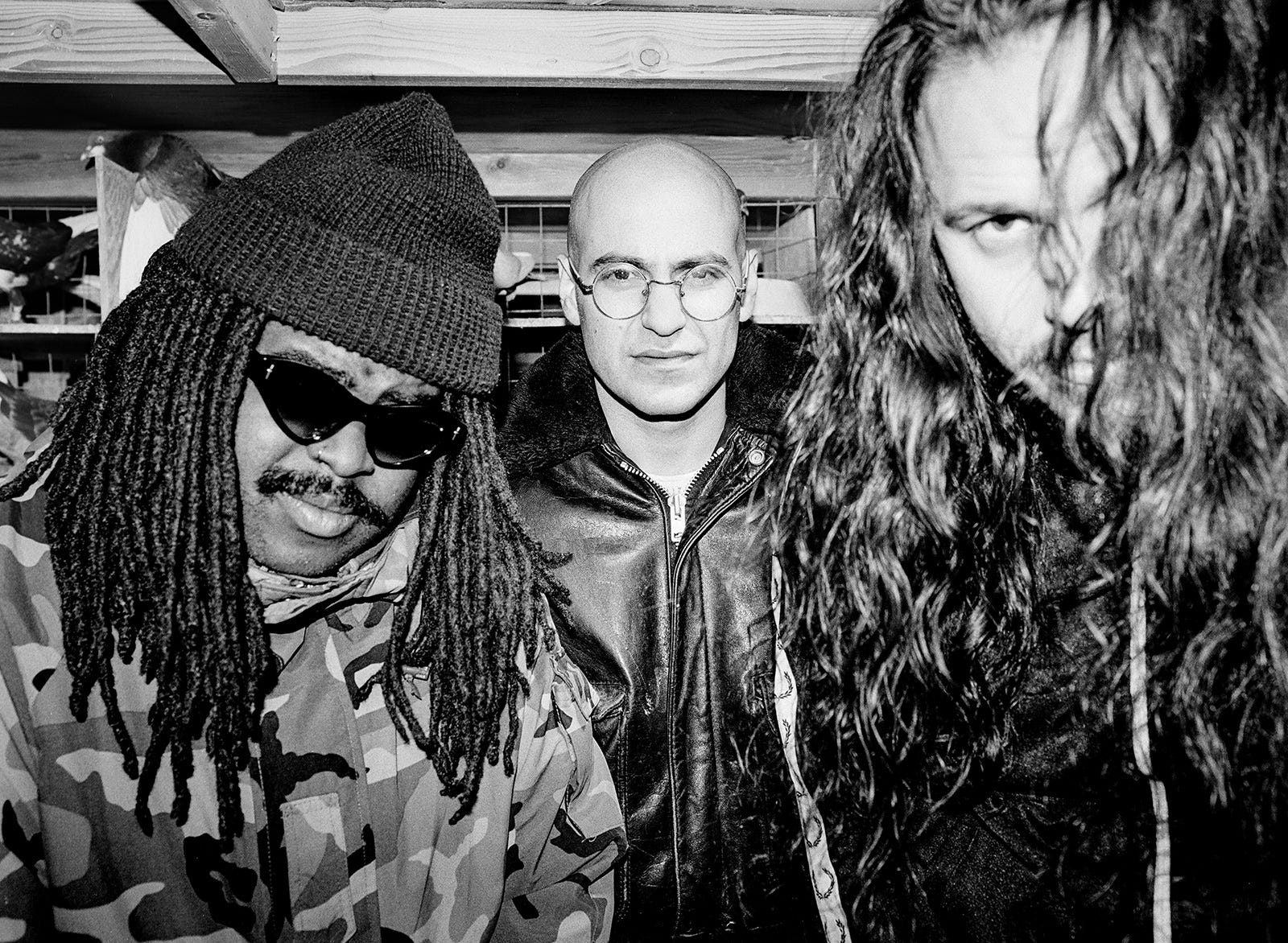
Show Me The Body might be the perfect hardcore band. They’re called Show Me The Body, for a start. There’s only 3 of them making all that noise, stretching an American brand of punk in all the discordant directions past mythical trios did: Minutemen, Big Black, Beastie Boys; righteous warriors of thrash, industrial and hip-hop. And money can’t buy a logo like theirs – 3 coffins topped and tailed; an echo of Black Flag’s greatest punk branding of all time; made for tattooists.
“I was thinking, ‘I wonder if it’s that same motherfucker?!’” said the band’s frontman and banjo player (it’s not what it sounds like) when we met in London last month. The last time was 10 years ago, although I’ve seen many SMTB shows since, usually thrown in unexpected places – bandstands, backstreets, subways stations – often free for anyone to turn up to.
A decade ago, I was there. I was there in the ballroom dance studio in New York’s Chinatown where the band launched their debut album, Body War. They kind of wished that I wasn’t there, but I was. It was early days for Show Me The Body and the idea of giving an interview seemed to repulse Julian especially. A photo shoot like normy bands do was even worse. But we got there after a weekend of hanging out, and back home at a London show a month or two later Julian greeted me like an old friend, shouting “Stu baby!” across the room in his thick New Yorker accent, the kind that makes everything sound furious and like it would do anything for you, the kind that gets away with calling a person a “cat” like it’s no big thing, which Julian doesn’t frequently.
I’ve since watched in admiration of how Show Me The Body have continued to operate in much the same stubborn and impassioned vein. You could almost call it old fashioned, the way they’ve adhered to the morally utopian standards and loyal sense of community set by the early ’80s hardcore scene. They’ve kept their shows free where possible and their sound as abrasive as ever. Over three albums, with a forth coming at the end of this week, they’ve mellowed on giving interviews and photo shoots, but the real things that make them punk have only ramped up.
Most important to the band is Corpus, the co-op/collective/community they co-founded when they were still teenagers. Julian refers to it as “family”, which it literally now is in the traditional sense, since he had a baby with his partner Asha – a Corpus co-founder and the band’s manager. “She’s a mother to many people in the city,” Julian said.
Visit the Corpus website and the first thing you’ll find is their manifesto:
CORPUS IS A COMMUNITY.
COMMUNITY BUILDING IS DIRECT ACTION.
CORPUS IS ABOUT MUTUAL RESPECT.
RESPECT BUILDS SOLIDARITY.
CORPUS IS BUILT ON HARD WORK AND PRACTICE.
INTELLECTUAL WARFARE IS MANDATORY.
INCREASING SELF DEFENSE AND AWARENESS IS PARAMOUNT.
CORPUS IS EMPOWERMENT AND BECOMING FREE.
Every Sunday Julian and some friends lead a free Corpus self defence class in McCarren Park, Brooklyn. It started more trad, taking place in a gym, “but it was kind of intense,” said Julian, who picked up on the pressure some people felt to join that particular gym or any other gym. So they moved to the park and made it “more anarchic and more of a skill share.” Eight or so regulars have been showing up to learn the fundamentals of boxing and Tai boxing since it started in 2020; ten new faces will drop in any given weekend. All ages and abilities, like the woman in her 60s who turned up for the first time last week due to her son being a fan.
It’s a positive by-product of Covid, like the Corpus Studio in Queens. Even in its raggy first iteration SMTB immediately opened its doors to others, launching the Corpus Family Studio Residency, which offers free studio time and the use of professional equipment to local bands in need. When the studio moved across the street, band bassist Harlan Steed spent 8 months on the upgrade with friend and designer Aidan Elias. The finished rooms suggest they could make a lot of money building studios for a living. People would also understand if they wanted to keep this pricey new space for only themselves (they haven’t).
Julian, Asha and their daughter live upstairs with a few Corpus pals. The building is the community’s headquarters, where they’ve also organised a book club from, a march for Black women, food bank drives and a mutual aid fund in the wake of the pandemic, and an annual Family Day for the neighbourhood that’s offered, amongst other things, Narcan training and free legal advice on immigrant rights.
After I made Julian consider the last decade for a moment he finally conceded: “I am proud of it, because of the Corpus family and the chosen family that we’ve built, and we’ve kept it family oriented. For that I am proud… I would also like some bread, y’know?”
